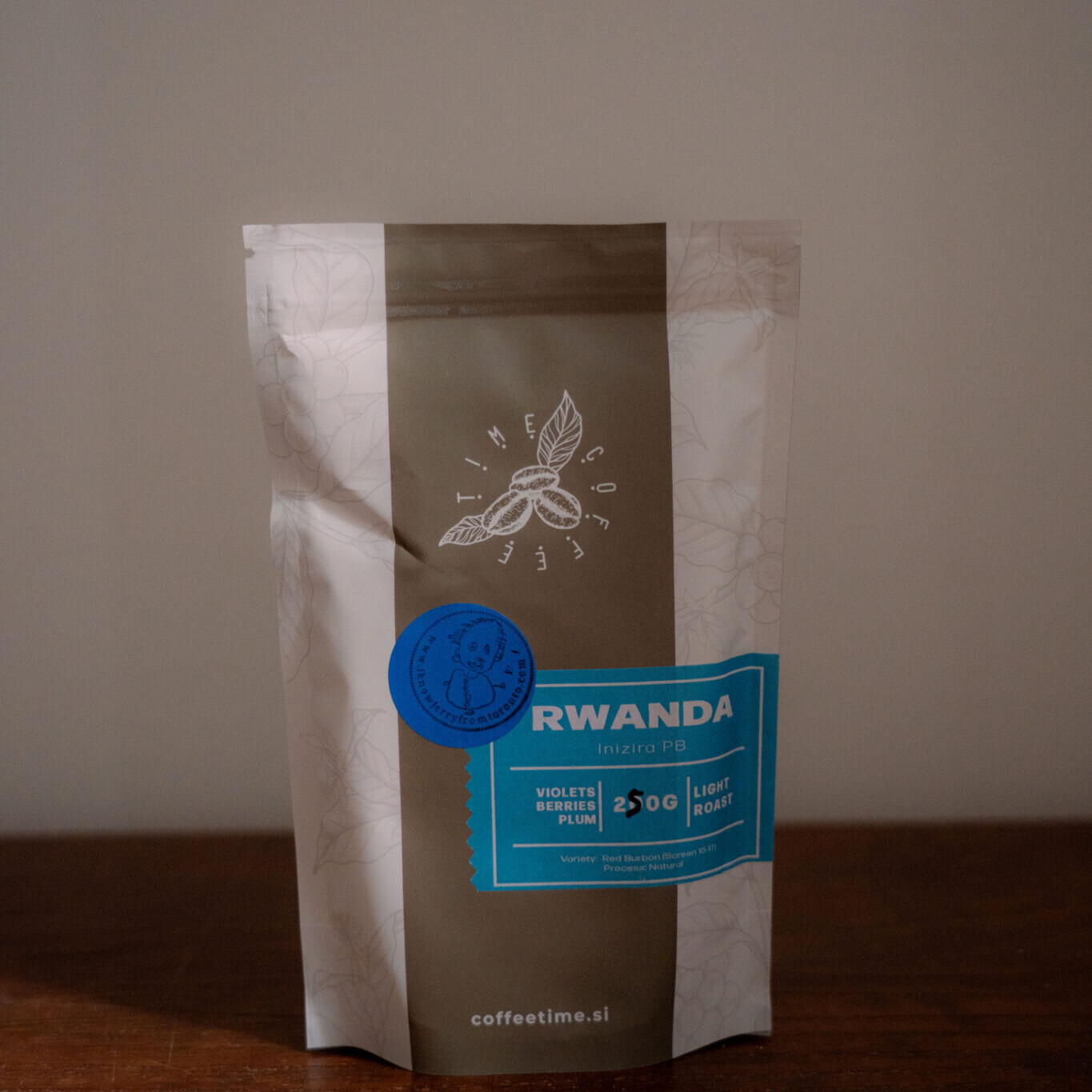
Who was in the August 2025 box?
A keen eye for detail and a bold approach in Zwolle (NL), another one off our French roaster list! Drôme (FR). Cupping at one of the Belgian pioneers in specialty coffee in Wetteren (BE), ending in the small but vibrant and growing coffee scene in Izola (SI).
Zwolle - The Netherlands
Aniek Weitkamp
Aniek Weitkamp creates art that’s honest and unfiltered.Her work reflects real emotions and everyday struggles, captured through striking visuals that don’t shy away from imperfections.
With a keen eye for detail and a bold approach, she challenges viewers to confront the beauty and grit of life as it is, raw, complex, and undeniably human.
Can you tell us something about yourself?
Hi there!I'm Aniek, 21 years old and a visual artist with a background in fine art painting.
My work explores the calm or chaos that comes from one strange human truth: we never really know what the future holds, yet we make decisions based on it all the time.
That tension fascinates me.
Right now, I’m diving into that idea by using visual elements of natural water, looking for patterns hidden within the mess.
I still paint a lot, mostly on canvas or paper, and lately I’ve been mixing things up by combining my painted images with risograph printing.
Riso lets me bring back those bright neon colors that pop up in my paintings, giving the prints a fun, electric twist.
What is the biggest challenge of being an artist?
Right now, my biggest challenge is not getting too sentimental.I can get really attached to certain visual discoveries in a painting and the real trick is to keep pushing myself to reinvent, again and again.
But honestly, that’s also the best part.
There’s so much emotion involved in the process: choosing what to keep, what to let go of, and what new thing to try next.
It’s a bit of a rollercoaster, but that’s what makes it exciting.
When did people first notice your work?
People first started noticing my creativity when I was a kid.In the Netherlands, it's tradition to end primary school (around age 11) with a big class musical.
Instead of acting in the spotlight, I designed the entire stage set, which, looking back, makes total sense.
I already had a clear vision of how things should look.
But I think my personal work really started to get noticed when I began creating a lot in a shared studio space in Zwolle.
A friend from art school and I were desperately looking for a place to work; we both had this strong need to just make things.
We ended up finding a spot in a building with 16 other creative entrepreneurs, and honestly?
I’ve been there ever since.
It’s been the perfect environment to grow, experiment, and just keep creating.
You recently had an exhibition.How do you usually prepare for an upcoming exhibition?
During my studies, I had the chance to intern at a museum, and honestly, that was my biggest learning experience when it comes to this kind of thing.How do you actually put together an exhibition?
That’s where I really picked up the practical stuff: things like promotion, curation, and how to make it all run smoothly.
But most of all, I learned this one key question:
What are you telling the viewer?
That’s still the starting point for me when I prepare a show.
I try to capture the story I want to tell and then I figure out how to shape the exhibition around it.
What goes where?
What needs to come first?
It’s like piecing together a visual puzzle.
What are you working on at the moment?
Right now, I’ve got a bunch of things going on at once.I’m preparing for three upcoming exhibitions in the next six months, which is super exciting.
At the same time, I really want to start sharing the magic of risograph printing with others, so I’m in the middle of setting up creative riso workshops.
The plan is to invite people into my studio and make cool stuff together.
That idea totally lights up my creative brain!
You're based in Zwolle, which is known as a breeding ground for many good hip-hop artists.Does this scene influence your work?
I think it’s a mix of conscious and unconscious, really.One of the great things about working in a city is how easy it is to meet new people.
There are two amazing art schools here, which means there are always tons of cultural events happening, and it’s super inspiring to be part of that.
Also… I was born in Zwolle, so I guess it’s partly unconscious too, just because I spend so much time here.
It’s kind of in my system.
"Thanks for giving a young artist like me the possibility to show and tell people about the artworks!"
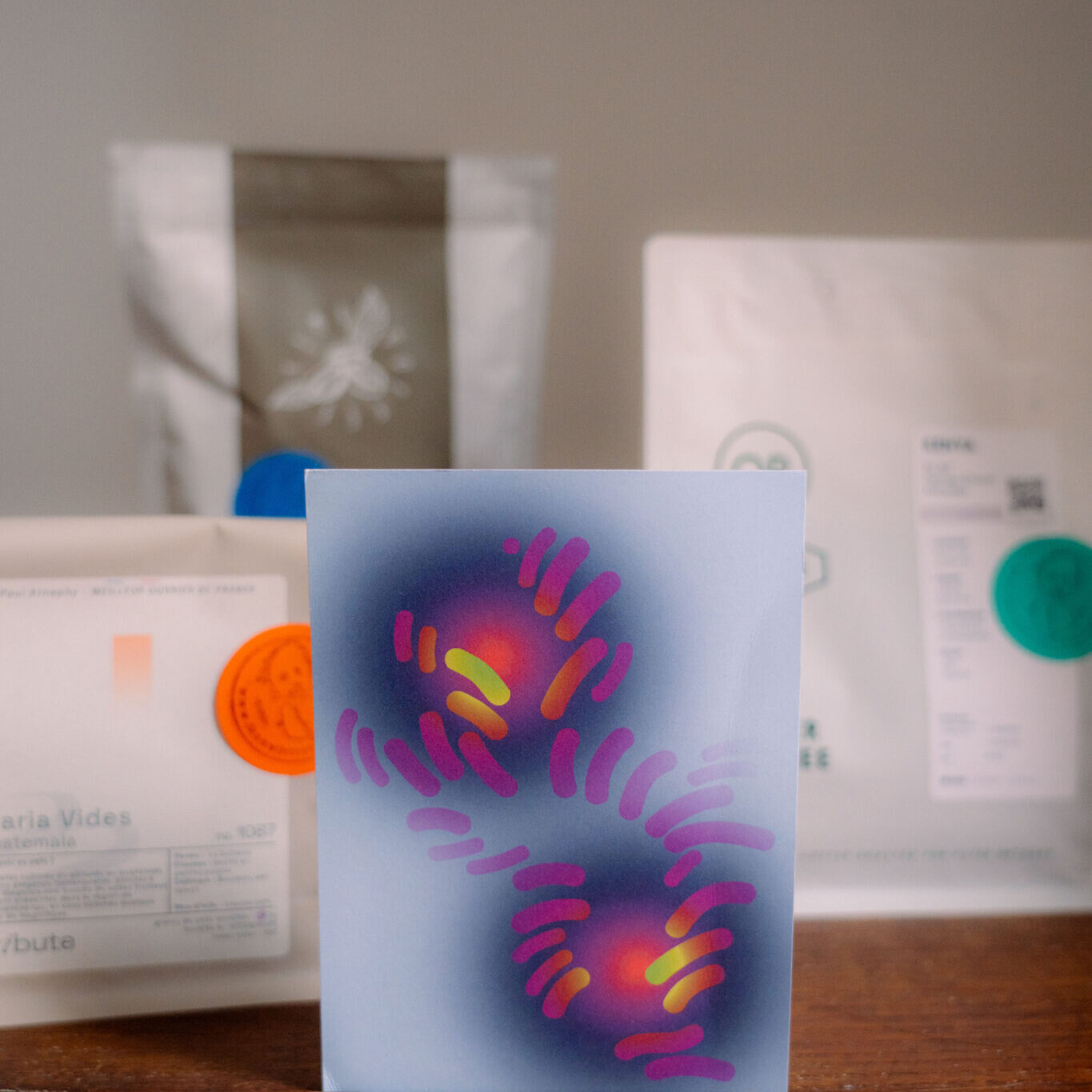
August box - riso print
more soon!
Drôme - France
Tribute
Another one off the list, and another one done, and another one done, another one off our French roaster list!
Can you tell me about where it all began, the moment when the idea of starting a roastery really felt achievable?
Partly when one faithful night I looked up to the stars and saw them align in the shape of our logo, and partly when the banks approved our loans…..No, really, like a lot of these sorts of things, we wanted to apply our accumulated 24 odd years of experience working with coffee and in coffee businesses with the mission of “working towards better coffee”.
And from there, it was just a series of small steps that got us closer to that goal of starting a business.
What is your favorite thing about being a coffee roaster?
So many things, hard to cite one favourite element of our work.I guess fundamentally there is no moment and no possibility of finishing the day with the reflection “OK that’s it, I understand coffee”.
It’s an endless source of fascination, complexity, difficulties and ultimately great moments of enjoyment with other humans.
We love the idea that a great cup of coffee can only materialise if shit tons of people along a complex value chain all decide to do a great job.
That’s pretty cool to think about!
I’m always lamenting the fact that often, so much work gets ruined because one person did not try or do what they should have done.
Most of us spend a good chunk of our waking hours working; it’s an important part of life and a great opportunity.
So, from our suppliers right through to our final customers, all working towards a common goal of excellence, with so many positive follow-on effects, we love that.
What have been the most notable moments that have shaped your career?
On a personal note, been lucky enough, amongst other things, to have been awarded or participated in:
Meilleur Ouvrier de France Torréfacteur Promotion 2018 SCA Coffee Roasting Champion France 2022 ZHAW University Coffee Excellence Graduate 2022 ITC The Coffee Guide Expert Panel Member Q-Grader Arabica SCA AST trainer in Green Coffee and Roasting
These sorts of things are great experiences, but not to be dwelt on.
I like to forget it and try to keep moving forward.
Besides that, I was heavily influenced by a guy called Michael Hunter, who was my first hospitality roastery/cafe boss.
He was awesome and showed me what it meant to set the bar high.
I’m very thankful for him, even now, about 18 years later.
And of course, meeting and working with an ex-associate, Aleaume Paturle, was also forever grateful.
And now super excited to be working with Gonzage Jaret.
Which coffee do you like to drink?
I love to drink the coffee that has little clues hidden in the cup about where, what and how it was grown.In terms of preparation, pretty much everything, from Capps right through to Cezve, I'm all in.
Are there any projects you and the team are excited to be working on now or in the future?
Because we have only been open since March, the main project is getting wholesale clients.We also have a few projects which we are always chipping away at concerning packaging, coffee degassing, single serve and some green sourcing projects.
We are also discussing a lot about where specialty coffee is right now, where it is going, what it could look like, how people see it, etc, etc.
Interesting times right now indeed.
Surprise us with an unexpected, coffee-free fact about yourself that shows a different side of who you are?
I was born in Australia, and the desire to walk around in shorts and thongs is in constant conflict with living in France.
"Merci beaucoup to you J.
and I know Jerry from Toronto"
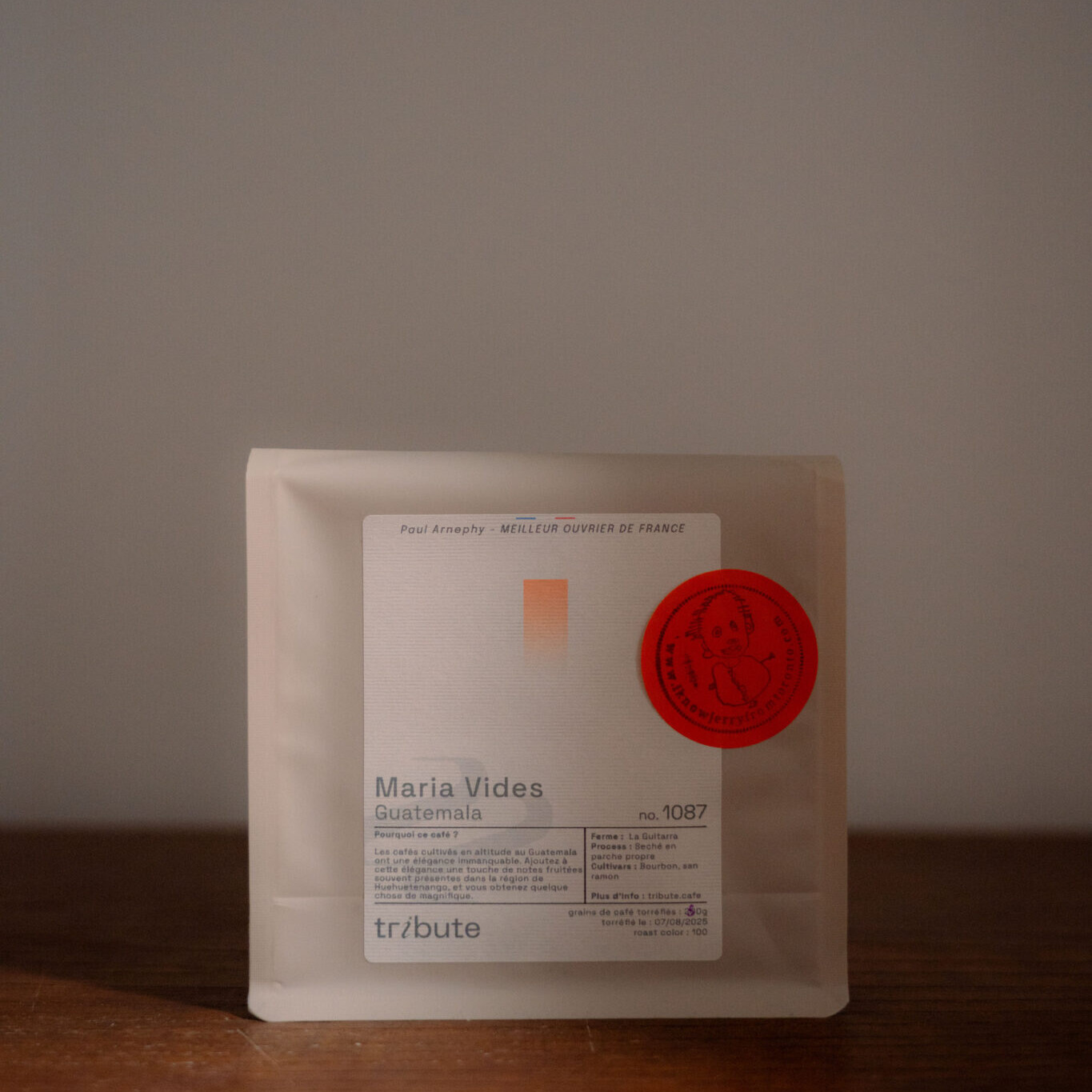
Guatemala - Maria Vides
Region: La Libertad, HuehuetenangoAltitude: 1800 - 1950masl
Variety: Bourbon, San Ramon
Process: Dried in clean parchment
Tasting notes: Caramel and fruity
Ethiopia - Mr. Pink
Region: Guji, UragaAltitude: 2100 - 2300masl
Variety: 74112, 74110, Heirloom
Process: Whole fruit drying
Tasting notes: Sweet and fruity
Wetteren - Belgium
OR
OR Coffee Roasters quickly became one of the Belgian pioneers in specialty coffee.They started with a coffee roastery in 2001, adding 4 coffee bars in Ghent and Brussels over the years.
Right before COVID they sold all the coffee bars to focus on buying all their coffee directly from coffee producers.
Today the roastery has a training academy with coffee workshops for baristas and coffee lovers.
Jerry was invited to Wetteren and got a personal tour around the roastery by Wouter Helsen, OR Coffee Roasters General Manager.
Inside, they fire up Probat machines, 22 kg, 60 kg, and even a micro-trommel for experimental batches.
Every bean gets a custom roast, because every bean has a story, and a secret recipe.
OR Coffee Roasters
They don’t just roast beans, they curate revolutions.
Small-batch.
Hand-crafted.
Directly sourced.
With attitude.
How did OR arise?
Wouter Helsen:The original founders Tom and Katrien started OR Coffee Roasters in 2001, long before there was any talk about specialty coffee or direct trade.
They saw the incredible lack of transparency in the coffee supply chain and honest information about the quality of the beans.
They had a lot of passion for the product and a clear vision: to introduce Belgium to a different kind of coffee.
Today Tom is still responsible for sourcing all green coffee at OR Coffee and he’s in close contact with farmers all over the world.
Tell us about your background!What have you done before working in specialty coffee?
WH: I have a master's degree in philosophy and I worked as a student in different bars and restaurants.When I finished my studies, I ended up in a small coffee bar in the center of Brussels.
It was the first specialty coffee bar in Brussels and I arrived right on time to catch the big wave of specialty coffee in Belgium.
You mainly do direct trade.What are the advantages and disadvantages of this?
WH: By buying coffee directly from coffee producers around the world, we can share an incredible amount of information about the origin of our coffees with our customers.We feel very honoured to be part of the long journey of coffee from the cherry at the origin to a cup of delicious coffee at somebody's home or coffee bar.
On the way, we try to roast our coffee with respect for its origin and quality, sharing the farmer's personal story and making sure he gets a fair price for his or her work.
Looking back, what were the most important moments in your coffee career?
WH: I have been very lucky to be at the right place at the right time when specialty coffee emerged in Belgium.This way, I have seen specialty coffee grow and evolve over time.
Discovering new flavors and the faces behind this incredible product are probably the most important reasons why I love my job.
From the first time I had a well-extracted natural Ethiopia on espresso or an Anaerobic coffee from Costa Rica on Chemex to my first visit to the origin in Rwanda and later spending time at the Dutras family Fazenda in Brazil.
All important moments, I love to share over a cup of coffee with our customers.
What’s your go-to method for nailing the perfect coffee every time?
WH: My go-to method for a perfect espresso every time, is probably to grab my bike for a short ride and visit Yuka in the center of Brussels!At home, I am a very lazy barista.
In the morning, I brew myself a filter coffee with a V60, and I have a Sage espresso machine for my afternoon espresso.
My advice to every home barista, invest in a good coffee grinder and quality water; all the other tools are secondary.
Let’s say I’ve got a free day, where should I go, what should I do, and what absolutely can’t I miss?
There are some amazing places serving OR Coffee Roasters, sharing a list of them here would not do everybody justice.With the danger of being incomplete, here are some places you should visit:
In Gent, have a coffee at Terug, Wild Child or Freddie.
In Brussels, please visit Yao, Chicago or KooKoo.
Have brunch at Esmola in Halle or Morris Coffee in Ruddervoorde.
A filter coffee at Kiss My Coffee in Oostduinkerke or finish your meal with an espresso at Atelier Gist.
"Please drink better coffee!
Life is too short to drink bad coffee.
Inform yourself about where your coffee comes from and follow a filter coffee workshop at the OR School.
This way, you can serve these beans the best way possible.
Cheers!"
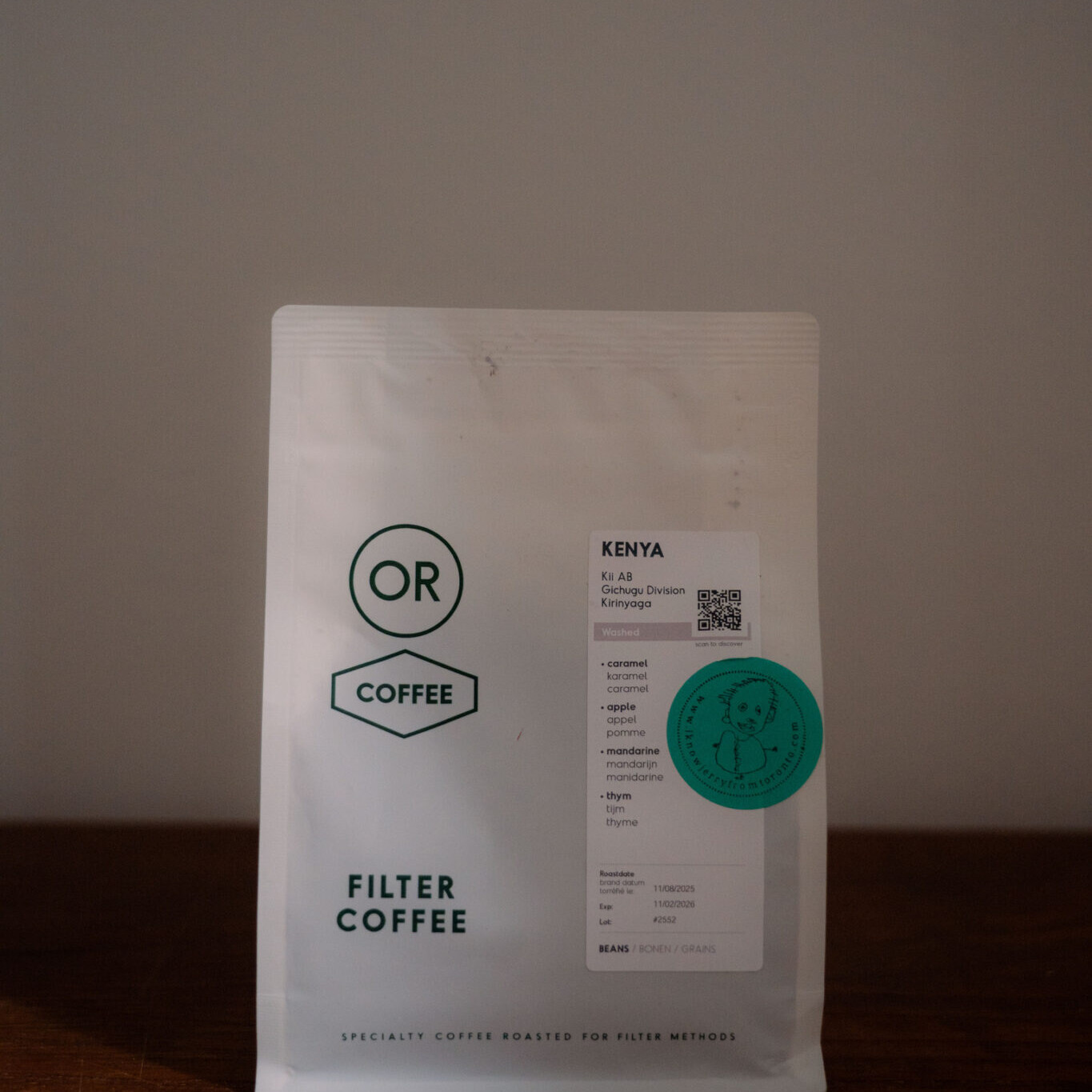
Kenya - Kii AB
Region: RungetoAltitude: 1600 - 1900masl
Variety: Batian, SL28, SL34, Ruiru 11
Process: Fully Washed
Tasting notes: Caramel, apple, mandarin, thyme
Ethiopia - Bona Zuria
Region: SidamaAltitude: 2200masl
Variety: JARC 1974/1975
Process: Natural
Tasting notes: Apricot, raspberry, vanilla
Izola - Slovenia
Coffeetime
Slovenia’s specialty coffee scene is small but vibrant and growing.
Where did you learn your roasting skills?And how long have you been doing it?
Our Master Roaster Klemen trained in coffee roasting at the Bloom Coffee Academy in Trieste.He has now been roasting for two and a half years, and we believe he’s doing an excellent job.
With every new batch, he learns and discovers something new – and that’s the true magic of roasting.
What is the most important part of what you do?
What matters most to us is educating a wider audience about coffee.Since we live in the Balkans, where Turkish coffee brewed in a cezve is still very common and cafés typically serve only espresso, which is often not the best quality, we make it our mission to share our knowledge with the broader public.
Above all, we want people to discover that there are countless ways to prepare coffee, each offering unique flavors and experiences.
What changes do you expect to see on the Slovenian coffee scene?
On the Slovenian coffee scene, we expect to see growing recognition of specialty culture.We’ve noticed that more and more people are becoming interested in specialty coffee, which truly excites us. Slovenians as a nation are quite open to “new” things, and above all, they strongly support local businesses – especially local roasteries.
As these continue to grow, interest in specialty coffee is rising as well.
Is there a collaboration during your career you are particularly proud of?
We are most proud of having had the opportunity to introduce several major Slovenian companies to our personalized specialty coffee program for their New Year’s gifts.This meant that a significant amount of high-quality specialty coffee was shared among their business partners.
A special highlight for us was creating a dedicated coffee series for the former President of Slovenia, Dr. Borut Pahor.
Which quality of coffee do you love the most?
What we love the most is the aroma of freshly roasted coffee as it pours from the roaster into the cooling drum.Later on, a rich and fragrant bloom is simply a must.
When it comes to coffee itself, we prefer fruity and fresh notes in our filter program, while on espresso, we always appreciate a rich crema with hazelnut and caramel flavors.
Let’s say I’ve got a free day in Izola, where should I go, what should I do, and what absolutely can’t I miss?
Of course, your first stop should be at the Coffeetime.si roastery, hehe.During the summer season, you can sunbathe at the beautiful Svetilnik Beach, enjoy a great dinner at Hotel Marina, or take a stroll through the old town, where you can stop at the Manzioli Wine Bar for a glass of excellent wine.
For the active ones, there’s a fantastic running trail between Izola and Koper that runs right along the sea.
While Izola is mainly a summer destination thanks to the sea, it also attracts many athletes and those who enjoy an active holiday in winter, as the temperatures here are milder than in Slovenia’s inland.
“The sea, coffee, and good company.
That’s all you need in life :)"