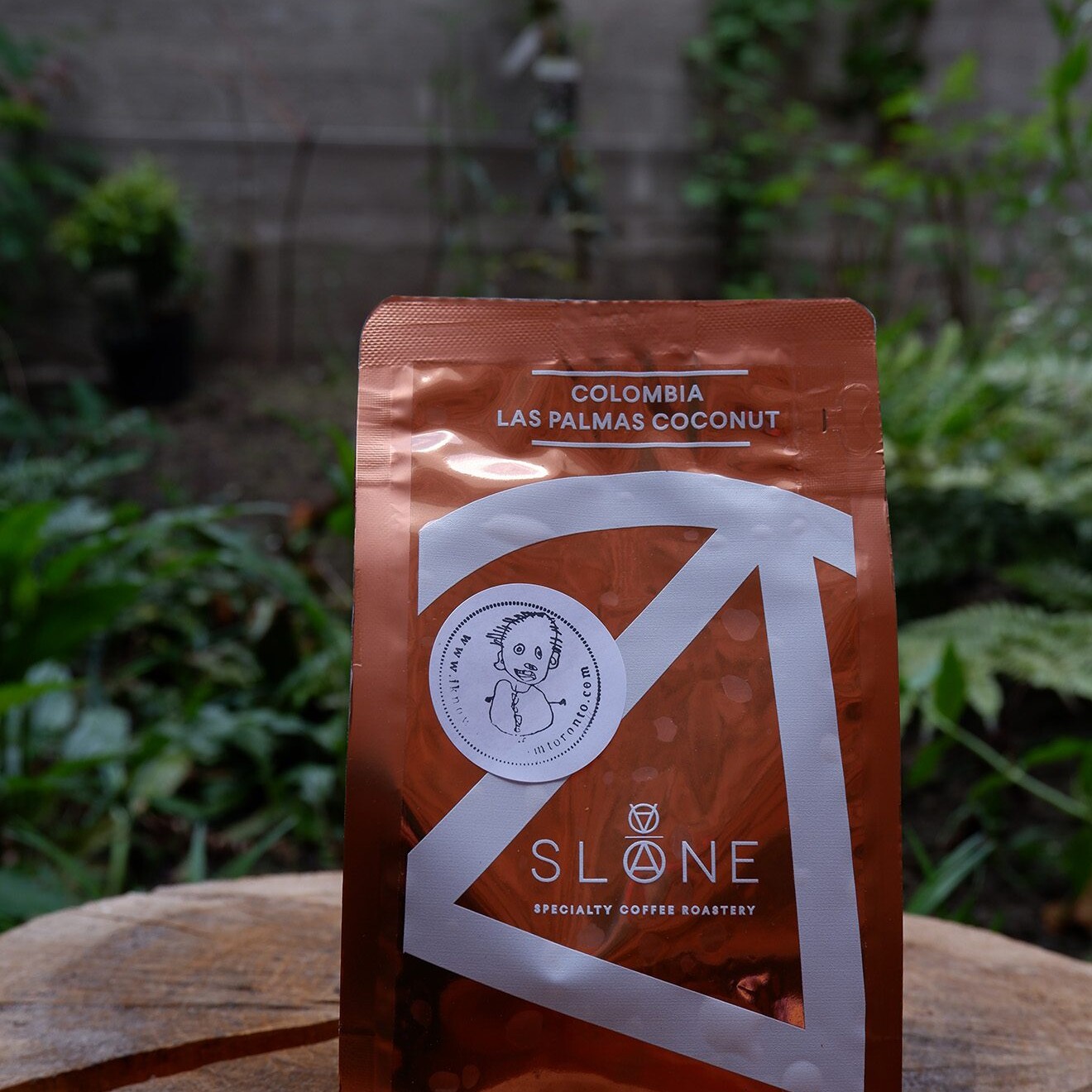
Who was in the May 2025 box?
After great coffee from Vilnius (LT), now great art!The proof that the new wave of French coffee is not only alive but seriously worth paying attention to, Toulouse (FR).
Producing Nobel Prize-winning coffee roasters in Göttingen (DE).
And again, our friends from Bucharest (RO) saved our day!
Vilnius - Lithuania
Akvile Magicdustè
We’ve had some amazing coffee roasters from Lithuania, but now we’ve found a great artist!Meet Akvile Magicdustè, a Vilnius-based illustrator, muralist, and comics author whose expressive, charming style brings a touch of magic to everyday life.
Her work is characterized by bold pastel colours and playful narratives, often featuring animals and humans engaging in surreal conversations
Would you like to briefly introduce yourself?
I like animals, magic, mysticism, healthy food, tropical colors, and nature.I don’t like McDonald's, greedy people, techno parties, and long Nordic winters without sun.
Lots of artists have rituals or routines that spark their creativity.Do you have any special habits or unique practices that help you get into the creative flow?
I just go to the studio every day and work 6 to 8 hours.As a freelancer, I could arrange each day differently, but I find that having fixed working hours and free weekends works best for my mental health.
In the end, most of the time is just finding time for creating, not divine inspiration.
Also, traveling and sketching are important to get fresh ideas.
Besides making drawings and illustrations, what are your other great passions?
Skateboarding is my big love!I also like to go to nature and take bike trips.
Do you have a connection with coffee?
Breakfast is my favorite part of the day, and coffee is an important part of it!I try to have slow mornings when I do yoga, then have my sourdough toast with coffee and read a book.
So, yes, coffee is important in this morning ritual.
If you could collaborate with any artist—living or from the past—who would you choose, and what draws you to their work?
There are too many to choose from!But I feel that life constantly brings some unexpected opportunities all the time, and I get to know wonderful people.
Jerry wants to reach more people to expand his coffee and art community.Do you have any original ideas to do this?
Maybe collaborating with art and illustration festivals!
"Be kind to yourself and others!"
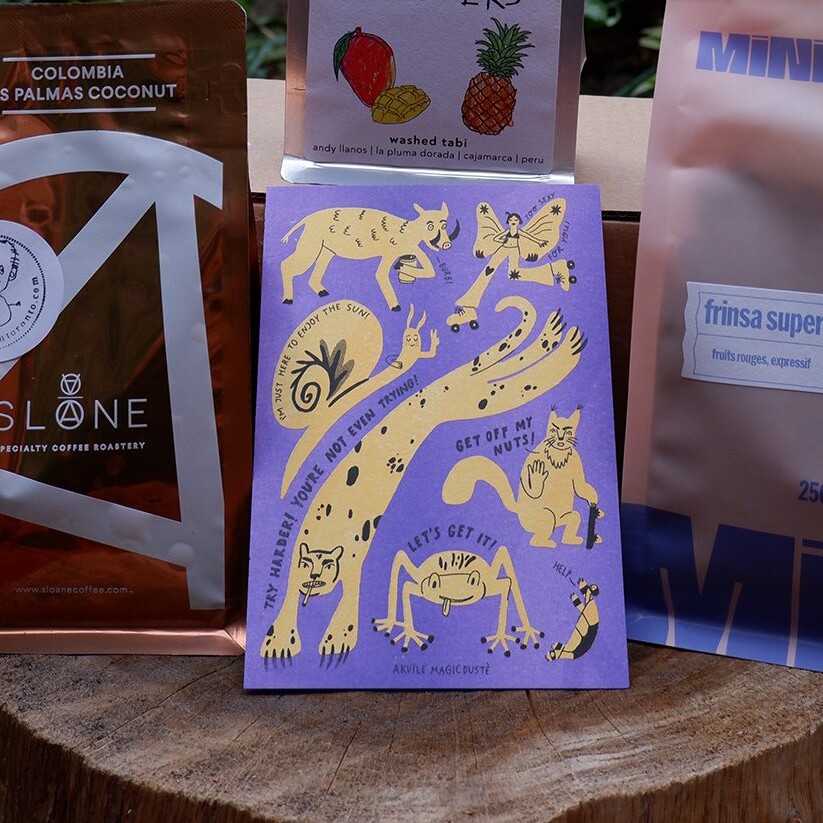
May box - Riso print
Riso 3-colorA3 (297x420mm), unframed
Limited edition of 35
Numbered
Arena Rough Natural 200g paper
Toulouse - France
Minifundi
At the Paris Café Festival, I met many passionate French coffee roasters, but one in particular completely changed my perception of the French coffee scene.Known more traditionally for its café culture than cutting-edge roasting, France is often underestimated in the specialty coffee world.
But this roaster brought precision, innovation, and flavor that rivaled the best from Scandinavia or Australia.
Their approach to sourcing, roasting, and brewing wasn’t just impressive—it was inspiring.
They proved that the new wave of French coffee is not only alive but seriously worth paying attention to.
Minifundi, can you tell us more about the name and the brand?
We are specialty coffee roasters based in Toulouse, in the south west of France since 2025. Roasting coffee from many origins for a few years, it came to my attention that the majority of the coffee production comes from small-scale coffee growers.Also, I grew up on a small bee farm, so it was natural for me to name it Minifundi as it comes from the Spanish word “Minifundia”, a term used to designate a small farm.
How did you fall in love with coffee?
I started working in coffee in Melbourne.I was not drinking coffee back then, but the coffee culture from this city got me! I was working in a small café/roastery after my Uni hours, doing all sorts of jobs from waitressing, selling beans, and slowly learning how to use a coffee machine.
I went back to Paris and a poor working experience later, I decided to move back to Oz to become a barista and learn how to make coffee.
I quickly realised that I had tons to learn and that quality was made before the beans hit the burrs of a grinder.
I was hanging around the sensory lab & code black roastery, shadowing roasters, trying to learn as much as I could.
After two years, I moved back to Paris, convinced that I wanted to roast.
A position was open at Lomi, and Paul Arnephy kindly gave me the chance to assist him before letting me roast the bulk of the production.
I keep very good memories of it.
I had some really nice coffees at the festival!How do you choose your coffees?
Thank you, it is actually the part I love the most.Finding gems, exploring origins, and trying to find the quirky bean that sets it apart from the others.
I cup a lot and rely on a few different importers.
I also travel to the origin to source directly with farmers such as Carlos Pola, Andres Acosta, Douglas Benitez, the Bayter family, and build special ties with bigger structures such as Greenco in Burundi and Cocarive in Brazil.
I am always looking for a variety of profiles and processes as long as it makes sense in the cup.
Outside of coffee, what are your interests?
I have to say, rugby, this city lives for its local team.With the mountains nearby, I enjoy a good bike ride, exploring the many mountain passes that the area has to offer!
Why do they call Toulouse “La Ville Rose”?
Toulouse is made of red brick.The city center has a real cachet thanks to this material.
How would you describe the coffee scene in Toulouse?
Growing for sure, new coffeeshops keep opening and coffee is getting involved in many cross-collaborations.People are now aware that a good coffee is expected anytime, anywhere.
"Stay curious."
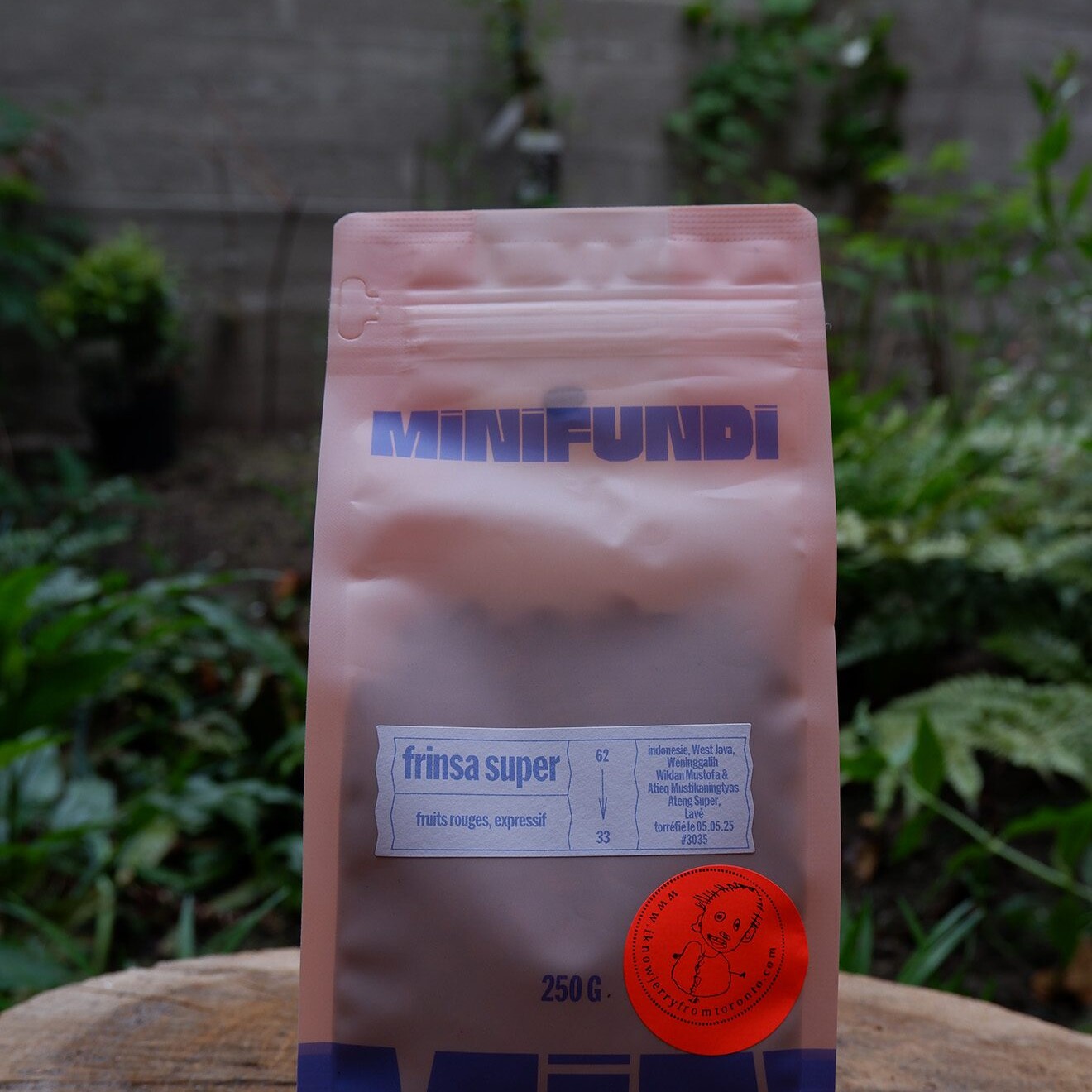
Indonesia - Frinsa
Region: West Java, WeninggaliAltitude: 1400masl
Variety: Ateng Super
Process: Washed
Tasting notes: Red fruits, expressive, fruity, sweet
Colombia - El Jordán
Region: Tolima, Planadas & GaitanaAltitude: masl
Variety: Caturra, Castillo, Colombia
Process: Washed
Tasting notes: Honey, lemon, fruity, gourmet
Göttingen - Germany
Sandbox
No wonder science and street art go hand in hand in this city—Göttingen has likely produced more Nobel Prize winners than anywhere else in the world.Coffee roasting is a science, which is why Göttingen is home to some truly exceptional coffee roasters.
Can you tell us how this started?
It started two years ago with the idea of opening a roastery.I wanted to get closer to the raw material and closer to producers to maybe understand more of the complex industry.
What is one of the most interesting things you have learned about the industry since you started roasting?
That everything takes longer than expected, haha.But seriously, I learned to be more patient and not always jump on the next thing.
Sometimes I look around and I want the roastery to be somewhere else already, but I have to understand that the people behind it put years of effort in.
I feel like coffee is actually a slow industry, which I like, it's really about the connections you make and not just about the next Panama Gesha.
How did you end up in the specialty coffee scene?
Started with a natural Ethiopia, of course haha I wanted to understand what I was drinking there and was lucky to start working in a specialty coffee shop with two friends of mine.(still one of the best times I had).
After I finished my studies, I started working full-time at a coffee roastery and from there, in two other coffee shops.
Overall, I've been in the industry since 2018.
That's an awesome logo!Who designed it?
Not many people know this, but the „ROS“ mistake is actually an honest mistake by my nephew, who „wrote“ the logo.I thought it was perfect and shows what I‘m trying to do here.
Not the be perfect from the beginning, having to courage to start somewhere and keep improving.
We started learning through trial and error, and that shouldn’t be a problem.
What is your experience with Coffee subscriptions like ‘I know Jerry from Toronto’?
I personally always like getting new coffees that I haven’t tried.Whether friends share them with you or through a subscription.
To me, it makes sense to let someone who‘s part of the industry choose the upcoming roastery for me, and I get to sit back and enjoy great coffees without the hassle of ordering everywhere.
Göttingen sounds like a great city.What is there to explore?
I love being in nature, and there‘s plenty here.Especially the city park, which actually transitions into the woods, is great.
There are some mountain bike tracks which are great for me since I love riding my downhill bike there.
"Sandbox Coffee started to be a platform where I‘m trying to showcase other people’s coffee projects.
I don‘t want to buy from the „famous“ producers only; many already do.
I‘m trying to buy project-oriented, which means there‘s usually some purpose to why I choose that coffee."
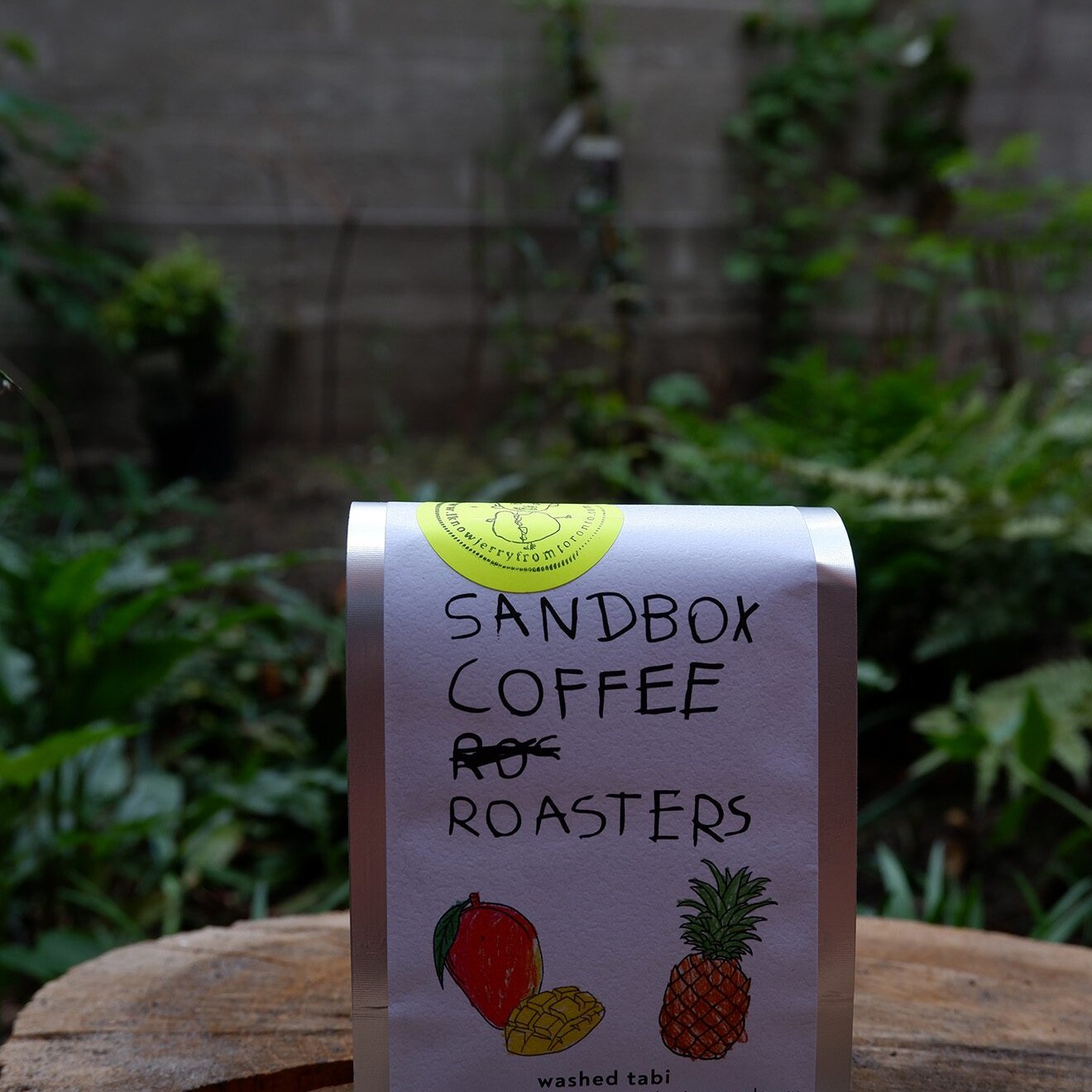
Peru - Andy Llanos
Region: CajamarcaAltitude: 1820masl
Variety: Tabi
Process: Washed
Tasting notes: Fruity, mango, pineapple
Bucharest - Romania
Sloane
This roaster from Romania is known for its dedication to quality, craft, and community.With carefully sourced beans and a passion for precision, Sloane brings out the best in every cup.
It’s the kind of roastery a friend like Jerry can always count on—reliable, thoughtful, and full of character.
So glad you are back in the box!So does this mean that 'I know Jerry from Toronto' has been a good experience?
Of course.We love to collaborate with subscription boxes, we think it’s a great way to experience many different coffees and roast styles.
We hope Jerry will keep on growing.
I remember from last time that you pretty much lived in your roastery.Has it changed much in the meantime?
Ha, ha!Yes, the pandemic life.
It was nice actually, it gave us some time to develop some new projects.
This spring we managed to fulfill one of those dreams we kept postponing: we opened a flagship store in the heart of Bucharest where you can come and drink any of the coffees in our offer and learn more about each of them.
Has the coffee scene in Romania changed much since the pandemic?
There were some uncertain times but people have come back stronger from it.People's habits changed: the office areas are semi-deserted, and people don’t grab their coffee on their way to work as they used to, so the areas for coffee shops to strive are different now and the approach is more of a leisure experience.
This is great because we always said that coffee and specialty coffee in particular is all about the experience: the sensory experience and the human experience.
So the coffee scene changed, some coffee shops closed but so many learned their lesson from what failed, and with newfound energy a wave of coffee shops opened in spring.
“It is close to miraculous and you should cherish it.”